Blogs
October 14, 2024
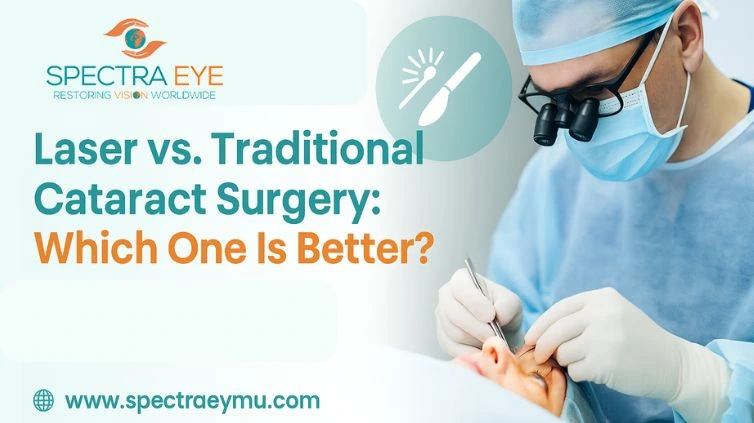
Laser vs. Traditional Cataract Surgery: Which One Is Better?

Laser vs. Traditional Cataract Surgery: Which One Is Better?
When you're considering cataract surgery, choosing the right method matters for restoring clear vision and improving quality of life. The two main options—traditional (phaco) cataract surgery and laser-assisted cataract surgery—both remove the cloudy lens and replace it with an artificial intraocular lens (IOL), but they differ in precision, recovery nuances, and cost.
At Spectra Eye, we appreciate how significant this decision is. Our specialists guide you with personalised recommendations, combining advanced technology with compassionate care from evaluation to recovery.
Cataract Surgery Options
Traditional cataract surgery is a proven, globally practiced technique. The surgeon creates tiny manual incisions and uses ultrasound (phacoemulsification) to fragment and remove the lens before inserting the IOL. This method has demonstrated safety and effectiveness for decades.
By contrast, laser-assisted cataract surgery uses a femtosecond laser for key steps like corneal incisions, capsulotomy, and lens fragmentation, and can also assist with astigmatism correction. The laser’s consistency and accuracy can reduce energy use and may be gentler on surrounding tissues.
Accuracy, Safety, and Recovery
Laser assistance offers computer-guided precision that can benefit patients with astigmatism or complex ocular features, potentially improving refractive accuracy and comfort.
Meanwhile, expertly performed traditional surgery also achieves excellent outcomes. Slightly larger or manual steps may mean recovery nuances differ, but it remains a robust choice—especially where laser platforms aren’t indicated or available.
Eye Cataract Surgery Cost
Costs often depend on technology and customisation. Traditional surgery usually costs less; laser-assisted surgery is higher due to advanced equipment. At Spectra Eye, we provide transparent estimates so you can balance budget and clinical needs confidently.
Which Cataract Surgery Is Right for You?
The ideal approach depends on your eye health, cataract complexity, coexisting conditions (like astigmatism), and lifestyle. Our comprehensive assessments help determine the option that aligns with your visual goals—without promoting one method universally.
Why Choose Spectra Eye?
- Experienced cataract surgeons using advanced technology
- Thorough pre-op evaluation and personalised IOL planning
- Clear guidance on recovery, follow-up, and realistic expectations
- Budget-conscious options without compromising safety
Frequently Asked Questions
Both approaches are very safe. Laser precision may reduce certain risks, while skilled surgeons achieve excellent outcomes with traditional surgery as well.